OpenAI’s Sora: Shutdown, Timeline and Alternatives in 2026
Sora shut down: the app on April 26, 2026, the API on Sept. 24, 2026. Key dates, how to export your videos and top alternatives (Google Flow, Kling, Runway).
Contents
Sora, OpenAI’s AI video generator, is gone: the app and website shut down on April 26, 2026, and the API followed on September 24, 2026 (OpenAI Help Center, checked Sept. 25, 2026). You can still export what you made at sora.chatgpt.com/sunset. This page covers what happened, how to get your videos back and what to use instead.
We first published this article in 2025 to introduce Sora, and fully updated it on Sept. 25, 2026. The original overview is summarized under “What Sora could do.”
Is Sora still available?
No. OpenAI shut Sora down in two stages:
- April 26, 2026: the app (iOS and Android) and the website closed.
- September 24, 2026: the API closed. The Videos API and the
sora-2andsora-2-promodels were retired, and OpenAI lists no replacement model (API deprecations page, checked Sept. 25, 2026).
OpenAI’s Sora pages now say the product has been unavailable since April 26, 2026 (OpenAI’s Sora page). ChatGPT doesn’t fill the gap: it creates and edits images, not videos.
Why did OpenAI shut down Sora?
OpenAI announced the end of Sora on March 24, 2026, in a post on Sora. The reasons it gave were brief:
- A spokesperson said the Sora research team would focus on world simulation research to advance robotics, and the company said it had to make trade-offs on products with high compute costs (CNN, March 24, 2026).
- According to Axios (March 24, 2026), OpenAI wanted to narrow its focus and its human and computing resources.
- The deal signed with Disney in December 2025, which would have brought more than 200 Disney characters to Sora, was called off at the same time (Axios and CNN).
OpenAI hasn’t given any other official explanation.
Sora timeline, 2024 to 2026
| Date | What happened |
|---|---|
| Feb. 15, 2024 | Sora unveiled, limited to red teamers and a few artists: videos up to one minute long (announcement) |
| Dec. 9, 2024 | Public release (Sora Turbo) at sora.com for ChatGPT Plus and Pro subscribers: up to 20 seconds at 1080p (announcement) |
| Feb. 28, 2025 | Launch in the EU and the UK (TechCrunch) |
| Sept. 30, 2025 | Sora 2, with sound, and the invite-only Sora social app on iOS in the U.S. and Canada (announcement) |
| Oct. 6, 2025 | Sora 2 in preview in the API (TechCrunch) |
| Nov. 4, 2025 | Android app in the U.S., Canada, Japan, South Korea, Taiwan, Thailand and Vietnam (CNBC) |
| Dec. 11, 2025 | Licensing deal with Disney (Axios) |
| March 24, 2026 | Shutdown announced (Axios) |
| April 26, 2026 | App and website closed |
| Sept. 24, 2026 | API closed |
What happens to your Sora videos?
How to export them
Here’s the process OpenAI describes (OpenAI Help Center, checked Sept. 25, 2026):
- Go to sora.chatgpt.com/sunset with the OpenAI account you used for Sora.
- Click Export.
- Wait for the email saying your export is ready, then download it.
Is there a deadline?
OpenAI hasn’t published one. As of Sept. 25, 2026, the sunset page says you can export your data at any time. OpenAI says that if it offers a final export window, it will email you before it begins, and that once Sora is discontinued and any final window has passed, it will permanently delete all data associated with your use of Sora. So export now rather than later.
Credits, subscriptions and the API
- Refunds and credits: OpenAI’s help page doesn’t spell out a policy; for a specific case, contact OpenAI support.
- Developers: the Videos API and the
sora-2models have been retired since Sept. 24, 2026, on OpenAI’s schedule. You’ll need to move to another video API (Google, MiniMax, Kling, Runway…). - Third-party platforms: a few services (Hailuo, PixVerse) still listed Sora 2 on Sept. 25, 2026, but with the official API gone, that access is uncertain (see our top 10 AI video tools).
What to use instead of Sora in 2026
By the time it shut down, Sora 2 had fallen well behind: 17th on the Artificial Analysis text-to-video leaderboard (with audio), with Sora 2 Pro 24th (checked Sept. 25, 2026). The top four spots go to Gemini Omni Flash (Google), Wan 3.0 (Alibaba) and two versions of MiniMax H3 (Hailuo), ahead of Seedance 2.0 (ByteDance).
| What you used Sora for | Best replacement |
|---|---|
| Clips with sound from a text prompt, for free | Google Flow |
| Top-ranked quality on a budget | Hailuo AI or Wan |
| Keeping the same characters across shots | Kling AI or Seedance |
| Editing and reworking existing footage | Runway |
None of these tools recreates the social side of the Sora 2 app (feed, remixes, “characters”): they’re creation tools.
Google Flow: the top-ranked free option
Flow, Google’s video studio, gives you Veo 3.1 and Gemini Omni Flash, which ranks first on Artificial Analysis for text-to-video with audio. It turns a text prompt or an image into a clip with sound, which you can then edit in plain language. See also our Google Gemini guide; Gemini includes Omni Flash too.
- Free: 50 credits a day, which don’t roll over. A Veo 3.1 Lite clip costs 10 credits, an 8-second 720p Gemini Omni Flash clip 12 (Flow credits, checked Sept. 25, 2026).
- Paid: Google AI Plus costs $4.99/month in the U.S. and adds 200 Flow credits a month; Google AI Pro costs $19.99/month and adds 1,000 (Google AI plans and Flow credits, checked Sept. 25, 2026).
- Restrictions: 18+ only; editing uploaded videos and avatars aren’t available in the European Economic Area (Flow availability, checked Sept. 25, 2026).
Hailuo AI and Wan: near the top for less
Hailuo AI (MiniMax) runs MiniMax H3, released July 31, 2026, which generates video with native stereo sound, up to 15 seconds at 2K (MiniMax blog). Wan (Alibaba) uses Wan 3.0 to generate single shots up to 30 seconds long. For free plans and pricing, see our top 10 AI video tools.
Kling AI: consistent characters
Kling AI (Kuaishou) focuses on realism and control. Kling 3.0, released Feb. 5, 2026, generates multi-shot videos with sound up to 15 seconds long, and Kling 3.0 Omni can reproduce a character’s look and voice from a reference video (Kuaishou press release).
Runway: generate and edit in one place
Runway pairs its Gen-4.5 model with Aleph 2.0 for editing existing footage and, depending on the plan, includes Kling, Seedance and Wan. Free plan: 125 credits, granted once; Standard costs $15/month, or $12/month billed annually (Runway pricing, checked Sept. 25, 2026). More in our Runway guide.
What Sora could do
When OpenAI unveiled it in February 2024, Sora was a milestone for AI video: for the first time, a model turned a simple text prompt into coherent shots up to a minute long.

According to OpenAI’s technical report:
- A diffusion transformer: videos were compressed into a latent space, then split into spacetime “patches” that work like the tokens of a language model. That let the model train on videos of different lengths, resolutions and aspect ratios.
- Detailed captions: as with DALL·E 3, training videos were described by a captioning model, and GPT expanded users’ short prompts.
- Simulation abilities: 3D consistency during camera moves, object permanence when things are hidden, and actions that leave a trace (a bite taken out of a burger).
- Acknowledged limits: rough physics (breaking glass), objects appearing out of nowhere, and confusion between left and right.
Sora 2, in September 2025, added synchronized sound (dialogue and sound effects), more accurate physics and the ability to drop a real person into a scene after a short verification recording (Sora 2 announcement).
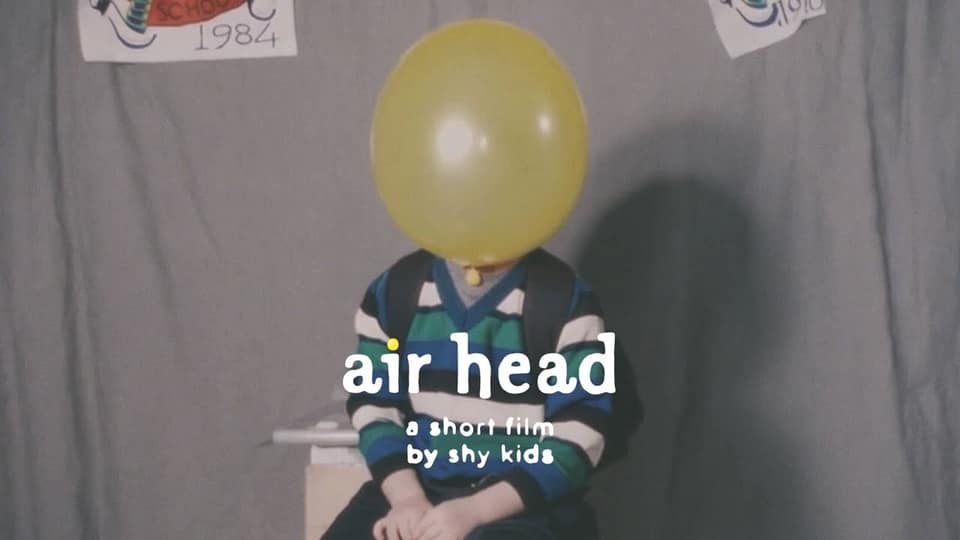
Air Head, a 2024 short film made by the shy kids collective with the original Sora and published by OpenAI.
FAQ
Is Sora shut down for good?
Yes. The app and website closed on April 26, 2026, and the API on Sept. 24, 2026. OpenAI hasn’t announced a comeback or a replacement video model.
Can I still download my Sora videos?
Yes, as of Sept. 25, 2026: go to sora.chatgpt.com/sunset, click Export and wait for the email. There’s no published deadline, but OpenAI will permanently delete the data after any final export window, which it says it would announce by email.
Can ChatGPT make videos instead of Sora?
No. ChatGPT generates and edits images, not videos. For video, you need a dedicated tool such as Google Flow, Hailuo, Kling or Runway.
What’s the best free alternative to Sora?
Google Flow: 50 free credits a day with no subscription, enough for up to five Veo 3.1 Lite clips. Flow also offers Gemini Omni Flash, the top-ranked text-to-video model with audio as of Sept. 25, 2026, though Google’s pages disagree on whether free users get it.
Why did Sora shut down?
OpenAI said it was refocusing the Sora team on world simulation research for robotics and making trade-offs on products with high compute costs. The Disney deal was called off at the same time.